15 April 2026 – Vishu Celebrations, Amritapuri Ashram
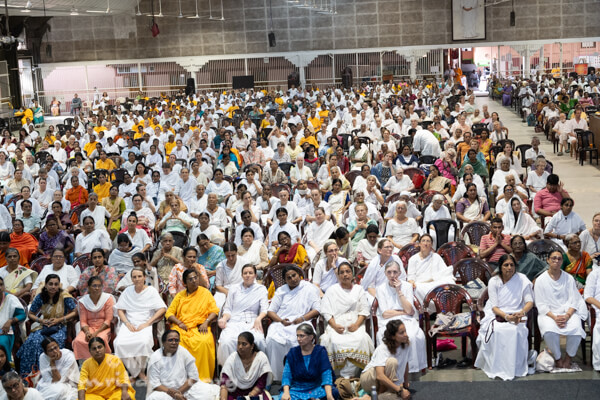
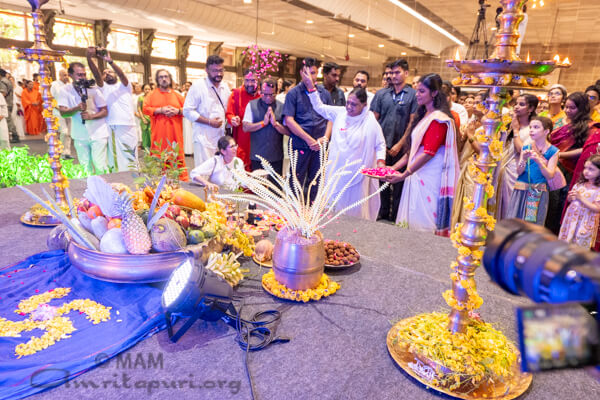
Vishu was celebrated at the ashram with great enthusiasm. Earlier in the day, the Kalari was decorated with flowers and leaves, and a special Vishukkani was arranged there along with traditional pujas.
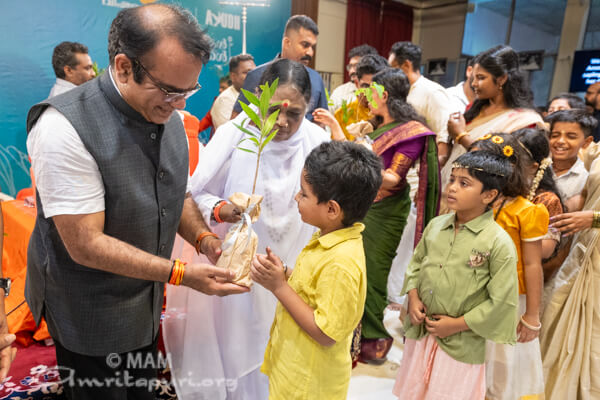
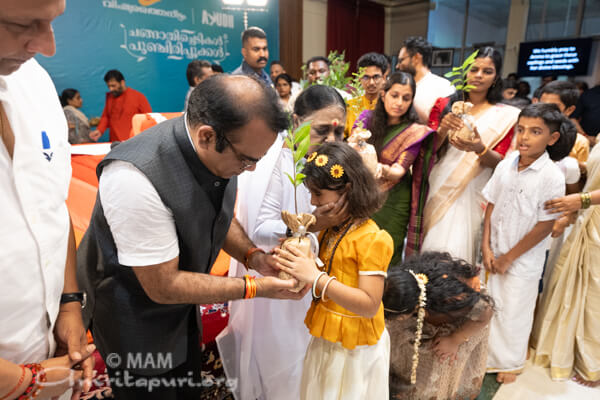
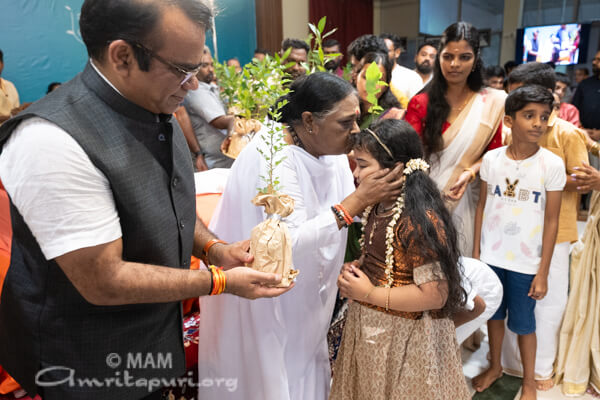
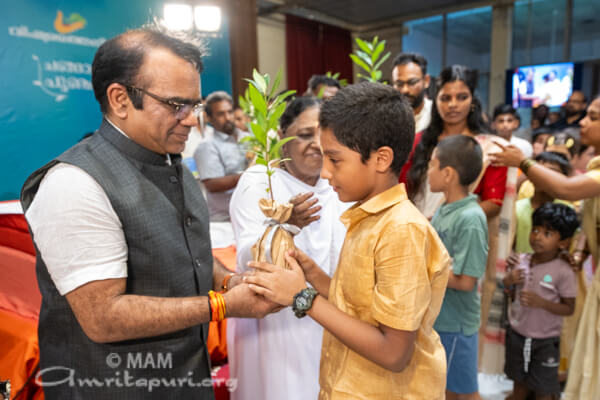
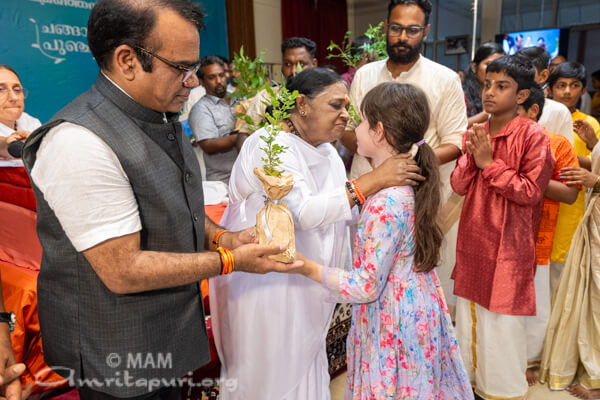
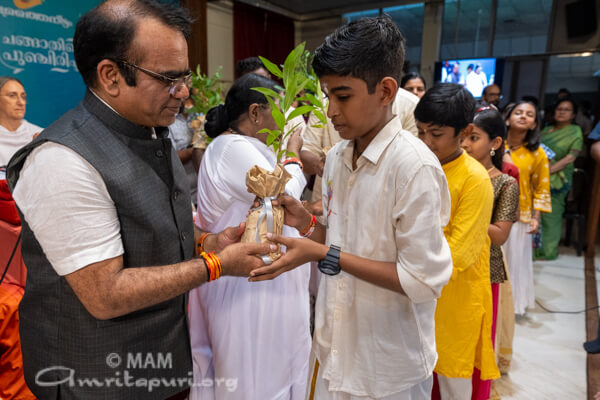
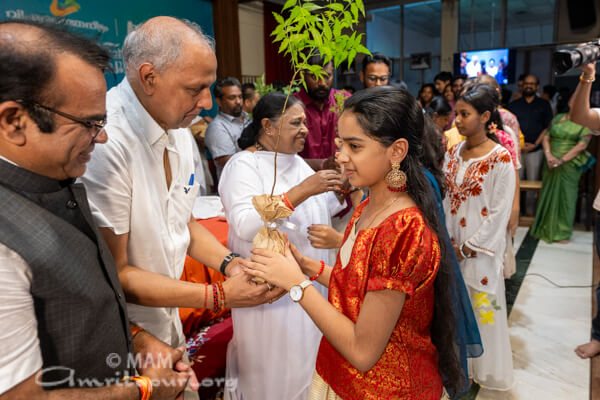
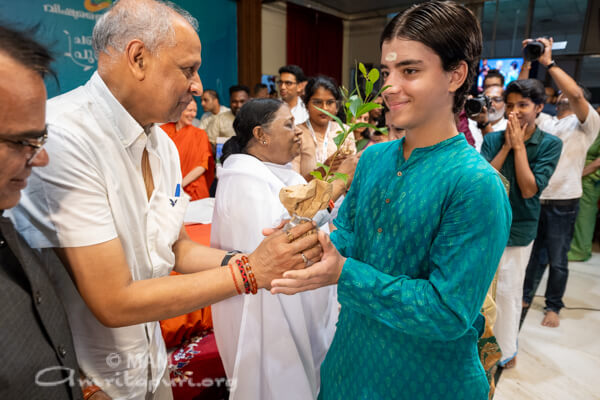
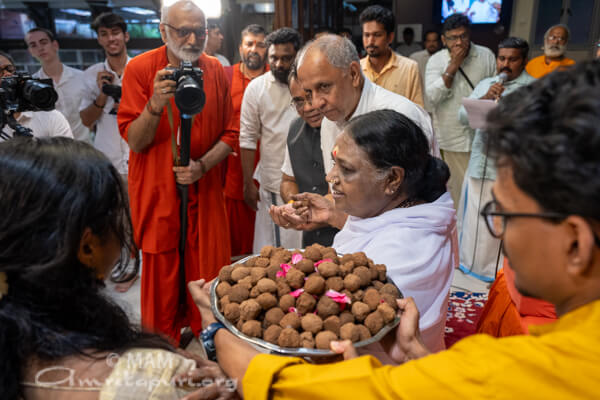
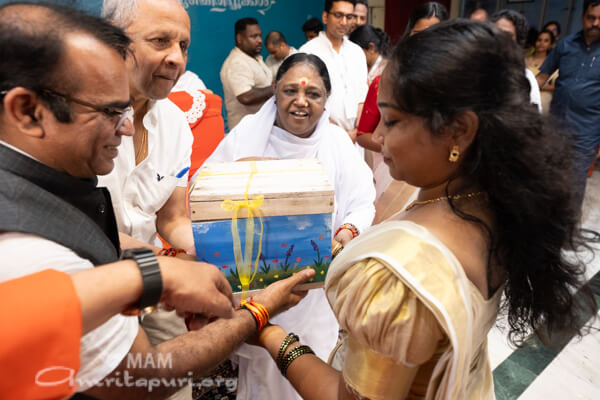
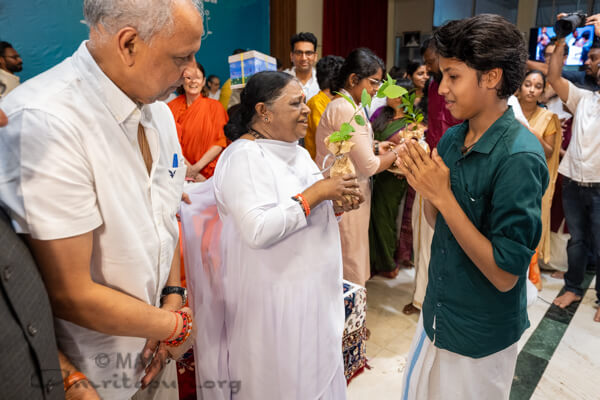
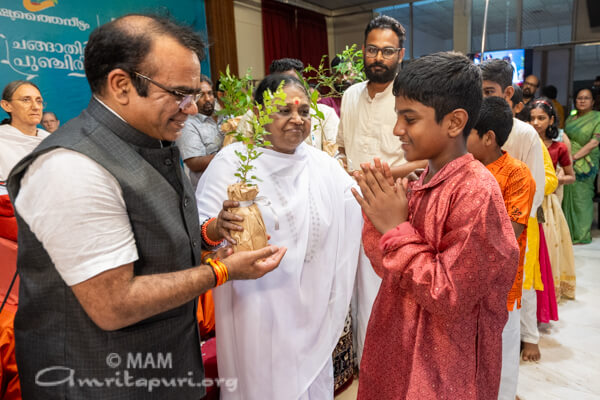
Amma blessed the Vishukkani arranged in front of the stage, which included traditional items and a collection of plants. She also distributed various plants to children and youths as part of the Vishuthai Neettam. These included seedballs, bee hives, and bird feeders, promoting a sense of care for nature alongside the festival spirit.
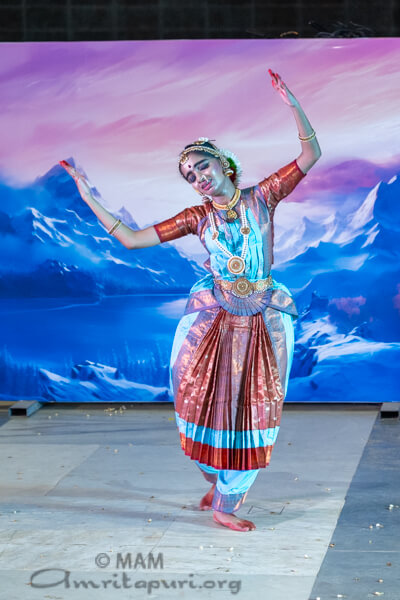
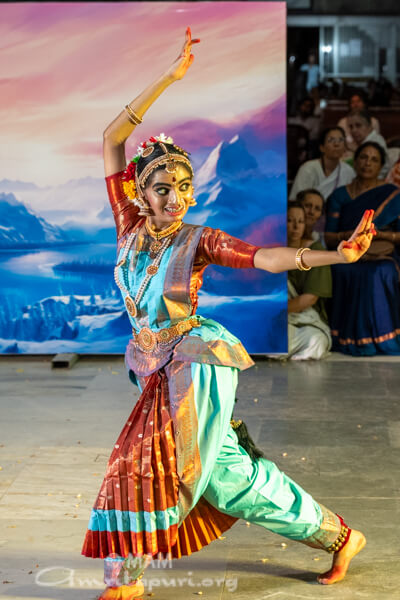
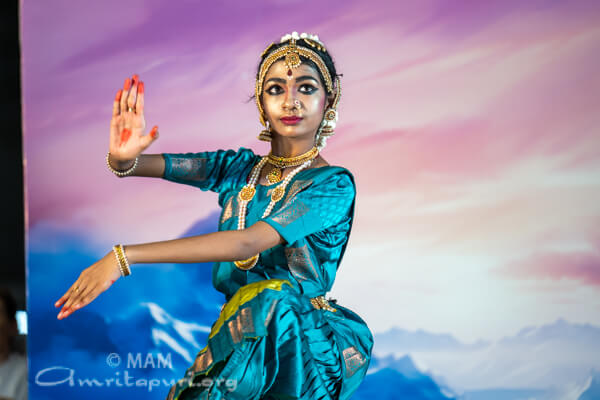
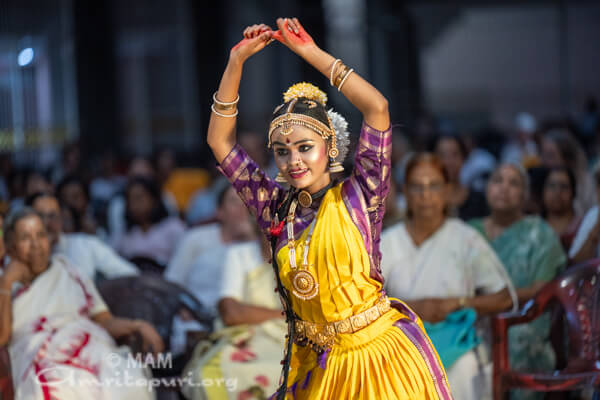
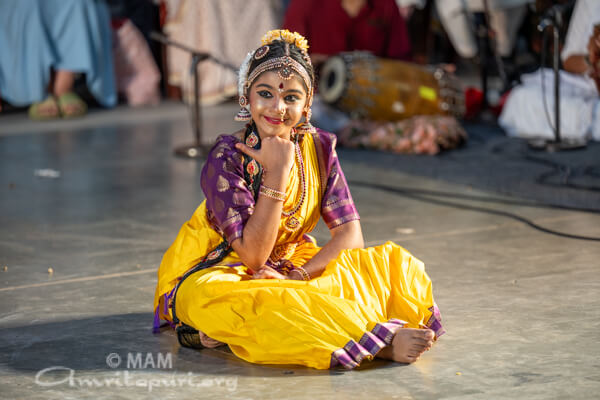
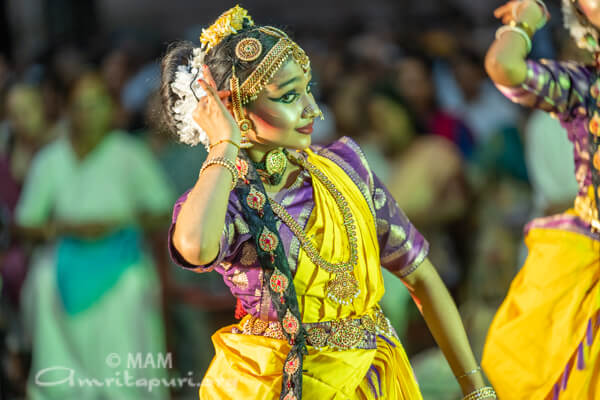
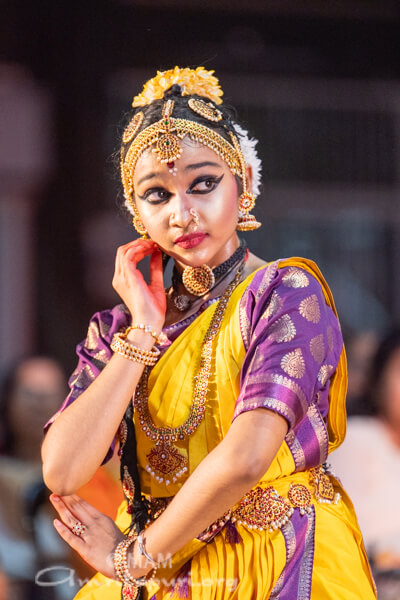
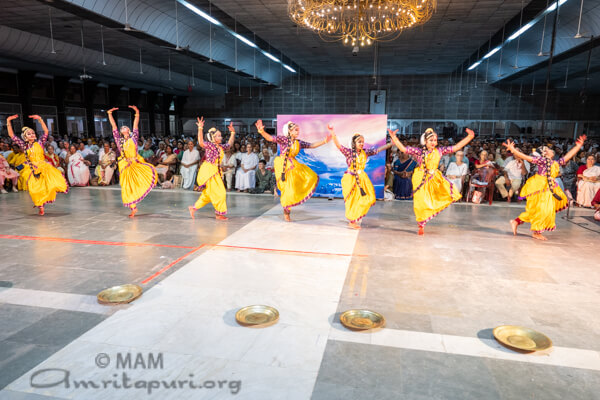
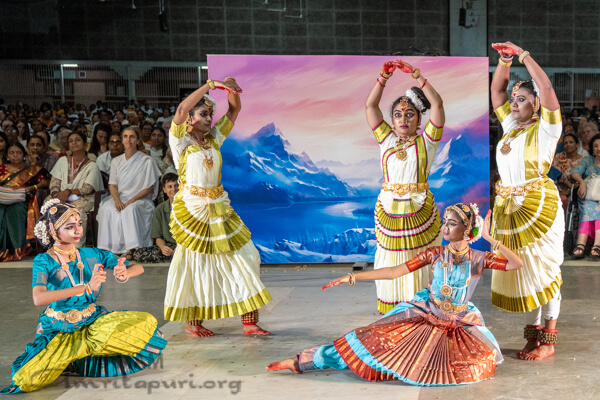
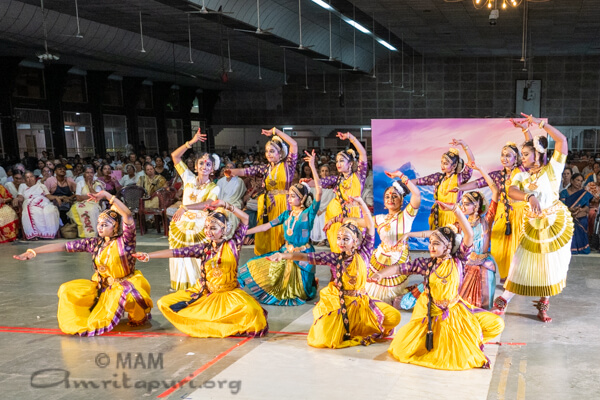
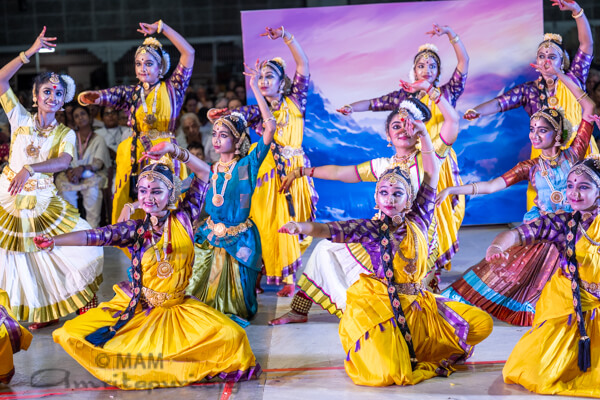
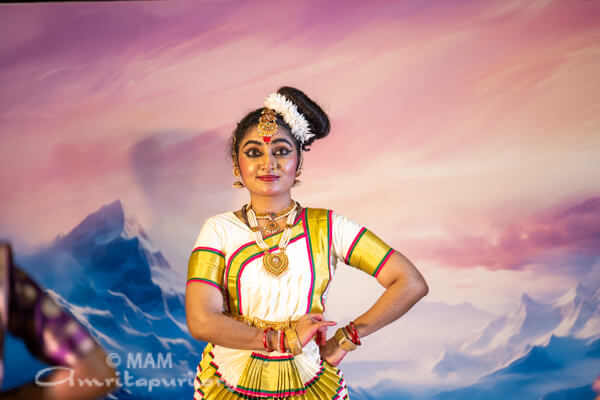
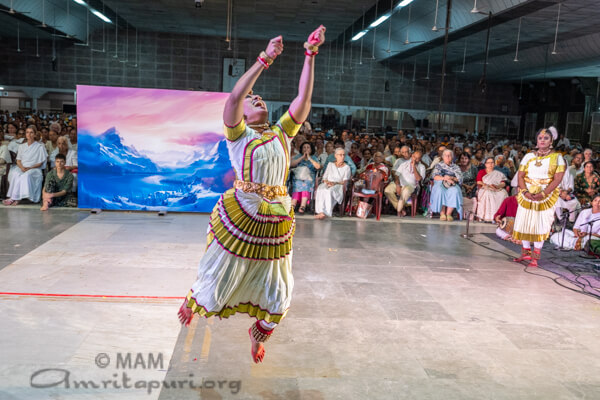
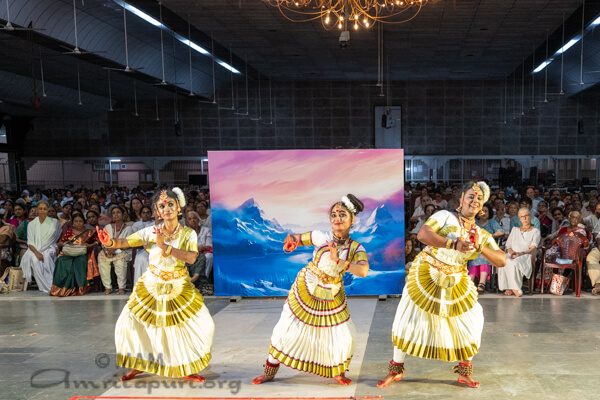
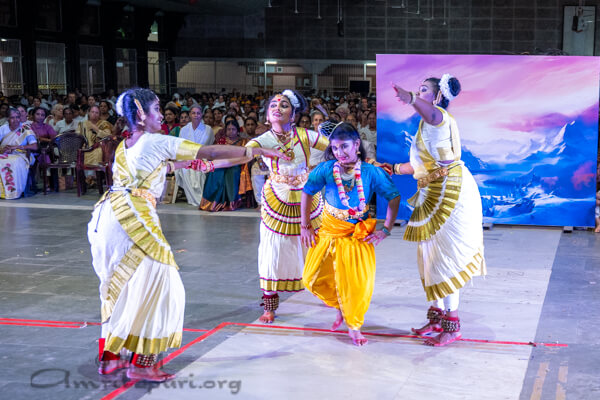
In the evening, the ashram children presented a series of beautiful dance programs in celebration of the occasion.
Speaking on the occasion, Amma said:
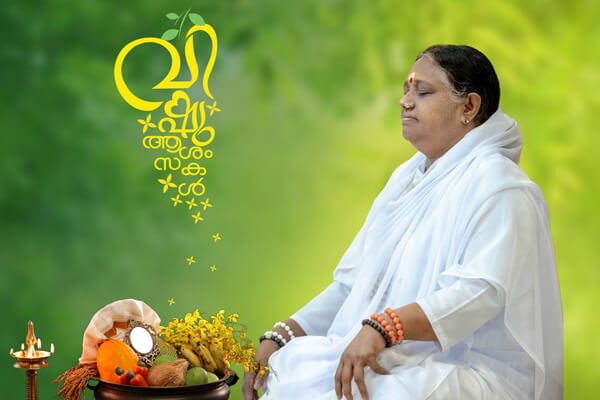
Vishu is a festival of joy that spreads happiness to everyone, much like the Kanikkonna tree in full bloom. The Vishukkani carries a deep message. It reminds us to live in harmony with Nature, to follow a healthy way of life, to nurture a family bound by love and unity, and to begin each day with a remembrance of the divine.
Vishu-kkaineettam offers a valuable opportunity to teach children important lessons about the value of money and how to spend it wisely. Today’s youngsters often tend to spend whatever they receive without much thought—buying whatever they see on the way, enjoying it with friends, and repeatedly pressuring their parents for money, both for necessary and unnecessary things. Those who do not spend money wisely are often unable to control their own minds and lives. Therefore, if we are giving Vishu-kkaineettam, we should also guide children on how and why money should be used responsibly. It is not enough to give money; guidance is also necessary.
On Vishu Day, what we should focus on is not so much what we first see with our eyes, but what thoughts and feelings first arise in our hearts. We should awaken within ourselves noble emotions such as devotion to God, love and compassion. Instead of looking for faults and shortcomings in others, if we can learn to see the divine in everyone and recognise the goodness in them, that itself is a great achievement. Then Vishu becomes truly blessed—and so does our life.
A rusty vehicle makes a constant creaking sound when it runs. But when the lubricant oil is applied, that noise disappears. In the same way, when love is given—from parents to children, by the elder children to the younger siblings, and so on—isolated islands connect to form a single chain.
Amma is reminded of a story. In a family, two brothers had a property dispute. In time, both stopped speaking to each other. Days turned into weeks, and weeks into months, and the silence between them only grew deeper.
Then came Vishu. As the Vishukkani was being arranged, the mother of the house did something unusual. She placed a group photograph of the entire family near the kani. But the glass frame of the photo was cracked. The elder brother asked, “Mom, why have you used such a frame for the kani?”
The mother gently replied, “Son, isn’t this exactly what our family situation is like right now? So, why should we hide it?”
Her words touched both brothers deeply. After a while, when everyone sat together for the morning meal, the brothers spoke to each other for the first time in a long while. They shared their affection and reconciled.
That Vishu did not bring them any special wealth or money. But it gave them something far more valuable—they regained love, friendship and the unity of their family.
In earlier times, this principle used to work. Values were genuinely meaningful then, and life moved forwards by preserving those values. But today, those values seem to be fading. At the heart of those values is love. Values exist to nurture love.
Where there is love, there will naturally be patience. There will be a willingness to accept others, and the ability to forgive and forget. When love comes first, all other virtues follow on their own. Love is the foundation, and values are meant to cultivate it.
And so, we must remain ever grateful for all that we have received. This is indeed what we are doing during Vishu—expressing our gratitude for everything we have received. This is the time that the mango blossoms flower, and all the spring flowers bloom. It is the season when jackfruit ripens, mangoes ripen, when all fruits come into fullness, we experience this gratitude towards Nature for all that it has given us.
As the line of the bhajan “Murali ooti ooti” suggests: “When the flute hums its tune and the bees come flying in, what must the flower feel?” Every line in that bhajan asks what one part of Nature experiences upon another’s arrival: What does the field feel when birds alight on it? What does the mango feel when the nightingale comes near it? and so on. Because every part of Nature experiences that its life has found fulfilment in giving. “I am born for the sake of others.” It is not just about taking for oneself; it is about giving as well.
Everything in Nature practices this giving, yet human beings alone tend to hold on and try to possess everything for themselves. What matters most is to remain grateful for the goodness we have received. Our elders shaped festivals and reflections like these to nurture good values within families and society.
The younger generation has much to learn from the older generation as well as our ancestors—good culture, values and many kinds of wisdom and ways of living that cannot be gained from school alone, including customs and traditions. The care and sincerity that every parent shows for their children are beyond measure. Yet, such values are often understood by the younger generation only much later in life.
Another important message that Vishu gives is to love Nature. To love Nature means to have compassion for all living beings within it. After all, pain is painful to everyone. We often see children picking up stones and throwing them at insects or harming small creatures like dragonflies—even cutting their tails—and then feeling happy about it. But children do this out of ignorance. The real concern is when we, who have knowledge, end up doing harm to others, taking pleasure in it, or finding satisfaction in others’ suffering. Sometimes, even someone else’s happiness makes us unhappy. This is just how our mind is. Amma is not criticising anyone. It is only when true understanding arises that at least a little compassion, a sense of empathy with the other, begins to awaken within us, and we begin to think, “What can I do for them?”
In reality, without Nature, we cannot exist. Nature exists within all of us. Human beings are a part of Nature. We are deeply connected to all living beings—birds, trees, animals, and every form of life. Only when our lives move in harmony with theirs can we lead a truly healthy and balanced existence. Moreover, every creature in Nature exists in mutual dependence. Human life itself is possible because Nature—plants, trees and animals—continue to exist. Without them, there is neither human life nor human civilisation. When any species becomes extinct, the consequences of that loss will ultimately be borne by us ourselves.
On our birthday, we must try to plant at least one sapling for others. We should remain alert and mindful of that. Vishu-kkaineeṭṭam, Vishu-taineeṭṭam—“Vishu’s gift of blessings, Vishu’s offering of saplings” should be our slogan. This practice is about cultivating love and harmony with Nature and all living beings, restoring ecological balance and embracing actions that foster both material and spiritual growth.
May we all be able to do so. May grace bless all my children with that strength.