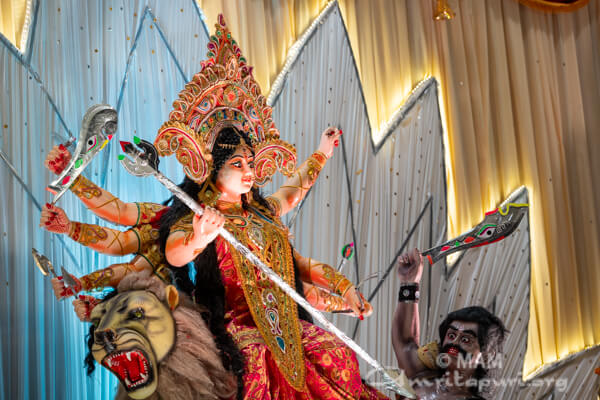
20 October 2026, Amritapuri – Navaratri celebrations
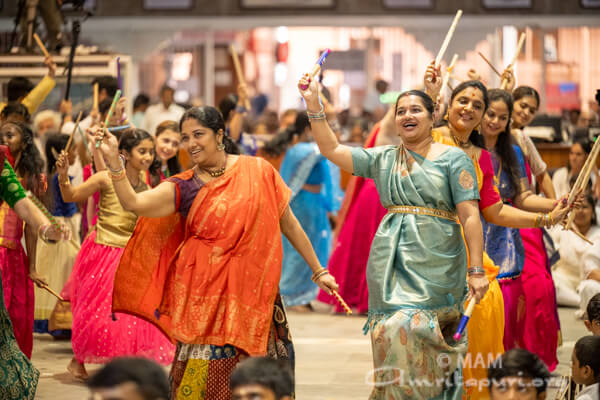
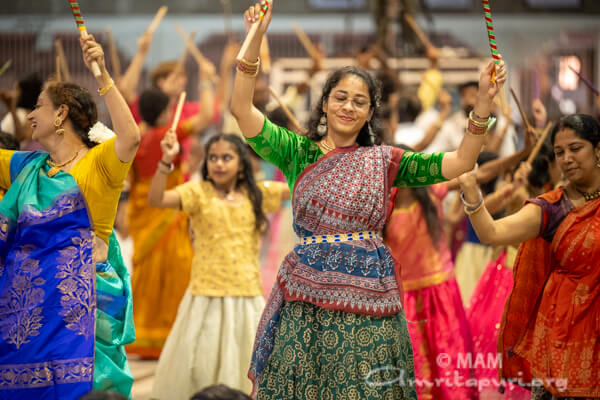
Navaratri was celebrated at Amritapuri with ten days of special pujas, chanting, bhajans and devotional music, culminating in the Vijayadashami celebrations with Amma.
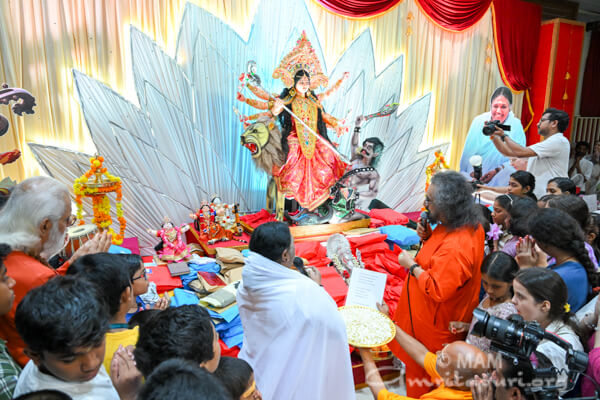
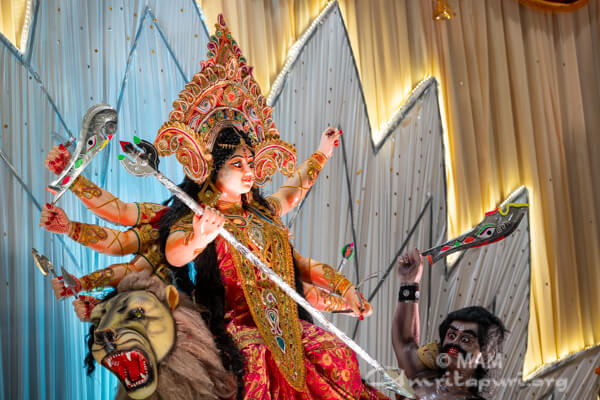
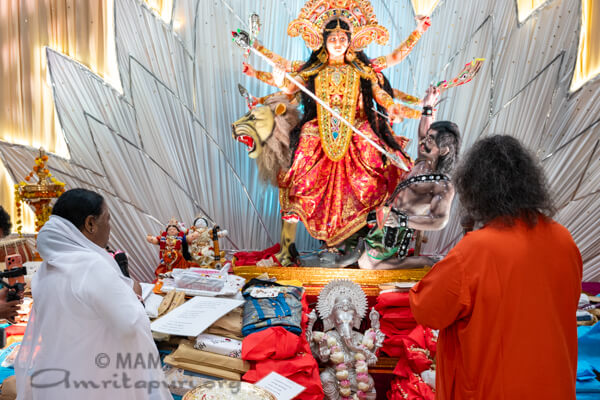
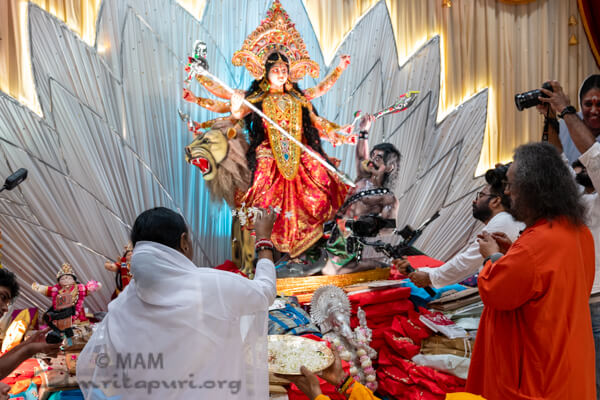
A special ‘bommakolu’ was prepared at the Kali Temple for the Durga Puja rituals. Every day, special pujas were conducted at the Kalari, accompanied by chanting, bhajans and kirtans.
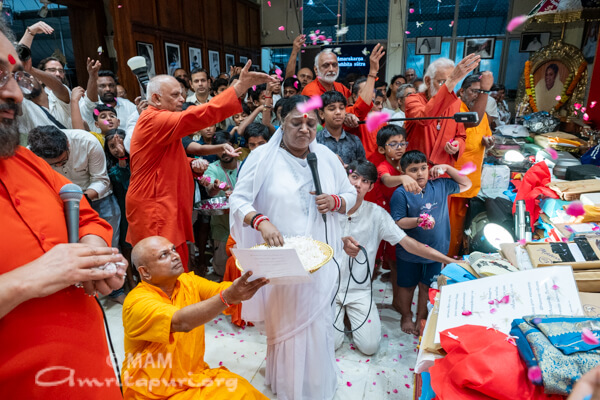
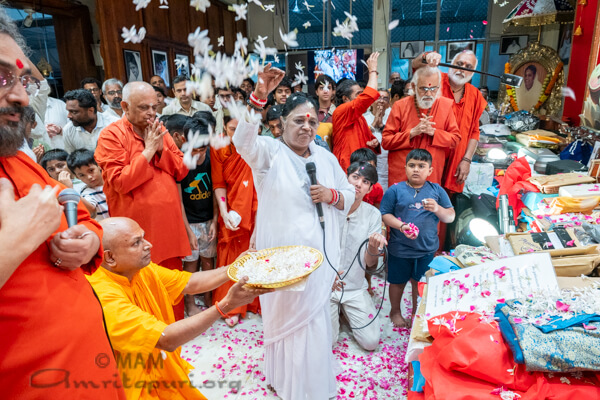
On the eve of Durga Ashtami, Amma led everyone in prayer as books and tools used in daily life were placed for worship. The prayers and worship continued on Maha Navami and Vijayadashami.
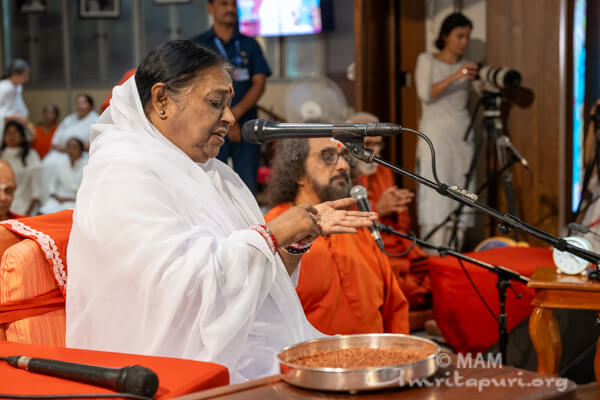
On Vijayadashami, Amma initiated everyone into the sacred letters by guiding them to write “Om Hari Shri Ganapataye Namaha.”
More than three dozen children received Vidyarambham directly from Amma. One by one, the little ones sat on Amma’s lap as she lovingly held their fingers and guided them to write the sacred mantra on a plate of rice. For the children and their families, beginning their journey of learning in Amma’s presence was a precious moment.
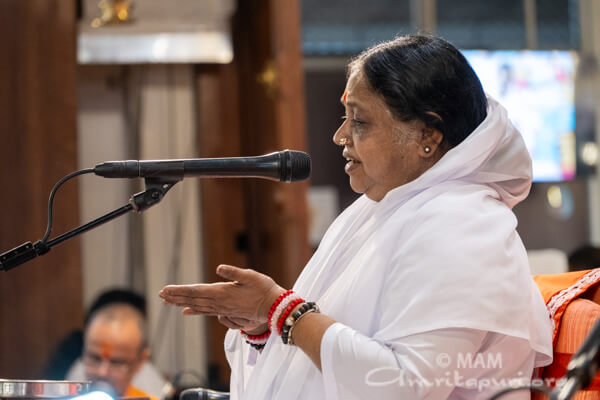
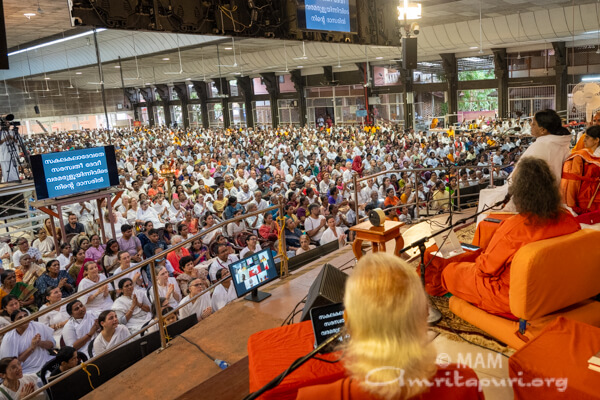
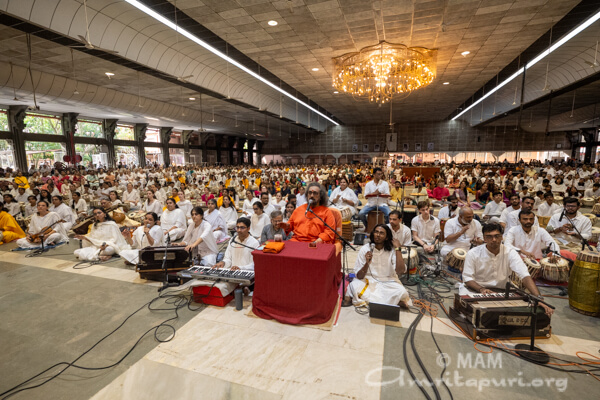
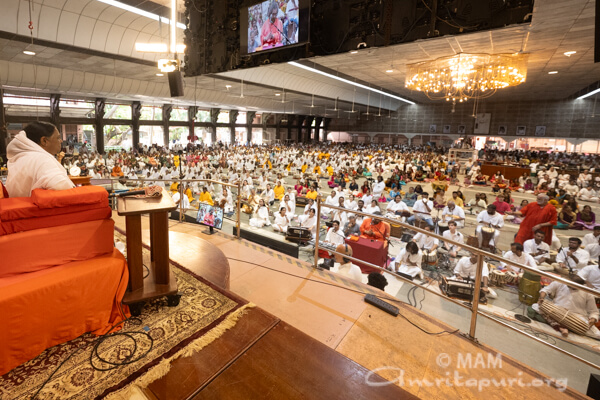
On the auspicious occasion of Vijayadashami, Amma sang bhajans and delivered her Vijayadashami message, reflecting on the spiritual significance of the festival.
Destroys the Demons Within Us
Speaking on the occassion Amma said: “Navaratri is a sacred time dedicated to contemplating and celebrating the glories of Parashakti—the Supreme Divine Mother, the embodiment of the highest reality and the infinite treasure of auspicious qualities.
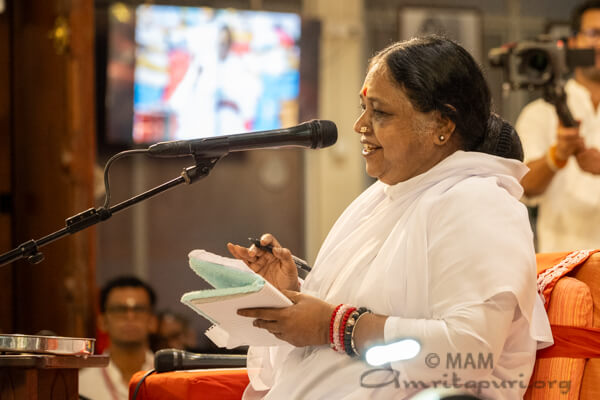
In this universe, there is nothing other than the Divine. The one Supreme Being shines forth as all living beings, the Earth, the stars, and every aspect of creation. Sanatana Dharma grants everyone the freedom to worship this Supreme Being in whatever form and sentiment they hold dear. Thus, we worship the Divine in many forms and aspects—as Shiva, Vishnu, Devi and countless others. Among these, worshipping the Divine as the Mother is considered one of the most sublime forms of devotion.
There is no bond as deep and enduring as the relationship between a mother and her child. Love, tenderness, compassion, forgiveness, sacrifice, protection and guidance—all these find their fullest expression in the motherly aspect of the Divine.
The Goddess gradually destroys the negative asuric forces within us, one by one. Thus, Navaratri celebrates the victory of dharma over adharma and good over evil. The final day, Vijayadashami, marks the day when we overcome the ignorance that lies at the root of our inner tendencies and realise the Divine within ourselves.
In this world, we can achieve many kinds of victories: victory in examinations, in sports, in business and in every endeavour. But the fruits of all these victories are limited. They can never last forever. Vijayadashami, however, signifies the supreme victory: oneness with God and victory over one’s own mind.
As we worship Jagadamba, the Mother of the Universe, during each Navaratri, a sincere resolve should arise in our hearts to honour all living beings and treat them with love and compassion. May we learn to see Jagadamba herself in everyone, transcending all distinctions, and rise towards spiritual fulfilment through love and selfless service.
Bomma kolu symbolises the creation
During Navaratri, there is a tradition of arranging dolls on tiers in homes, known as bomma kolu.
This symbolises the creation of the universe.
As we move from the lower tiers to the higher ones, birds, animals, human beings, kings, great souls and deities are placed in an ascending order of creation.
The topmost tier is left empty. This reminds us that whatever stage we have reached, we can still move forward and rise higher.
Bomma kolu reminds us that the individual soul journeys spiritually through increasingly higher births, finally merging in God.
May we see the Divine Mother in every living being in this universe. May we love and serve everyone without distinctions and rise towards perfection.
May the grace of the Divine Mother bless everyone.” Amma concluded.
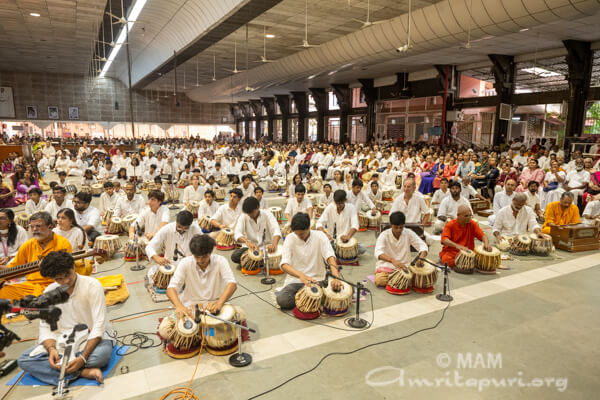
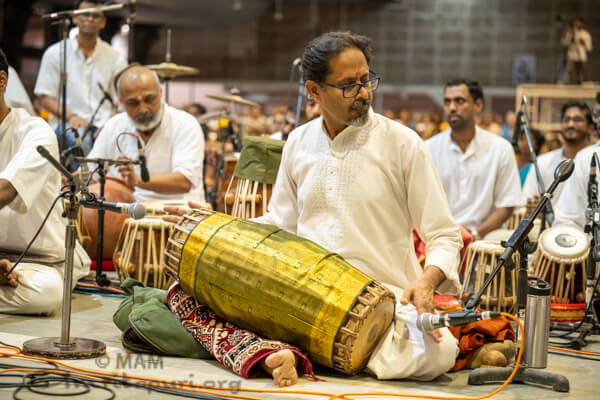
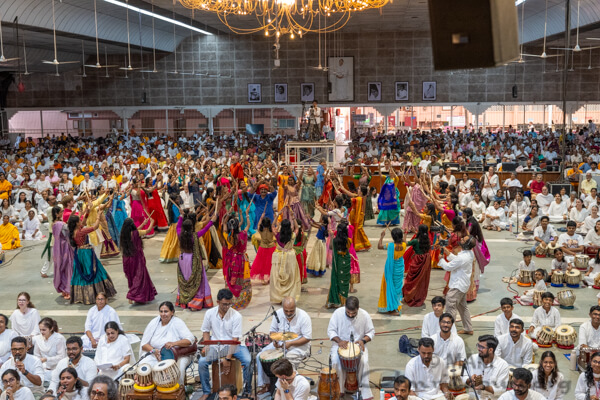
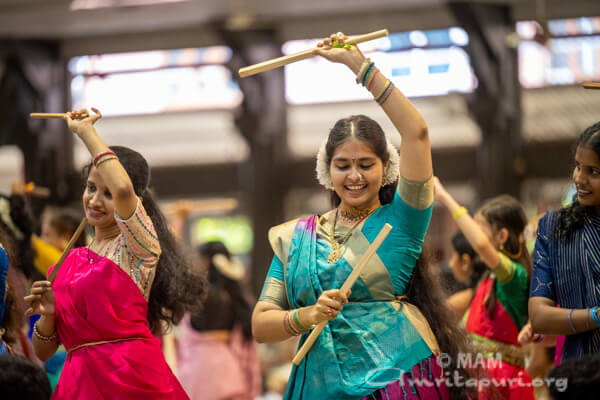
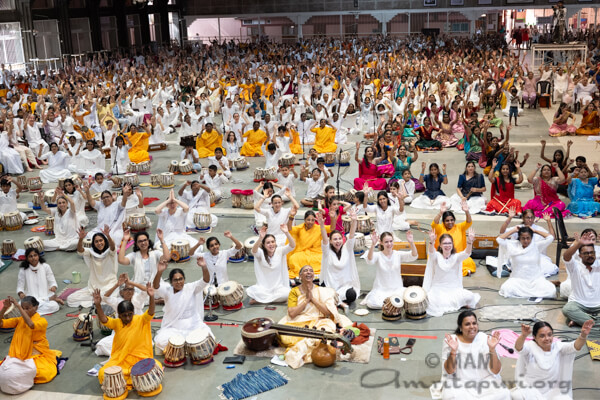
The celebrations concluded with a musical offering of Nadopasana, with participants singing and playing traditional instruments, including the tabla, veena, mridangam, flute and violin.
-KaliCharan